
How effective website-based volleyball passing training is for students
2026/02/05
The Effectiveness of Learning Passing Volleyball for Students on Website-Based
The effectiveness of teaching passing the ball in volleyball to students based on the website
Authors:
Sumbara Hambali, Achmad Sofyan Hanif, Widiastuti, Firmansyah Dlis, Samsudin, Akhmad Sobarna
Journal: International Journal of Human Movement and Sports Sciences, 2022
DOI: 10.13189/saj.2022.100224
Abstract
Volleyball is a popular sport in Indonesia and is widely taught in educational institutions. Due to the COVID-19 pandemic, training was transferred to an online format. One of the tools for distance learning is the website.
The purpose of the study was to determine the effectiveness of teaching passing techniques in volleyball using a website.
The method is experimental (One Shot Case Study).
The participants were 120 students from the Faculty of Physical Education, Health and Recreation STKIP Pasundan.
The training was carried out over 8 lessons.
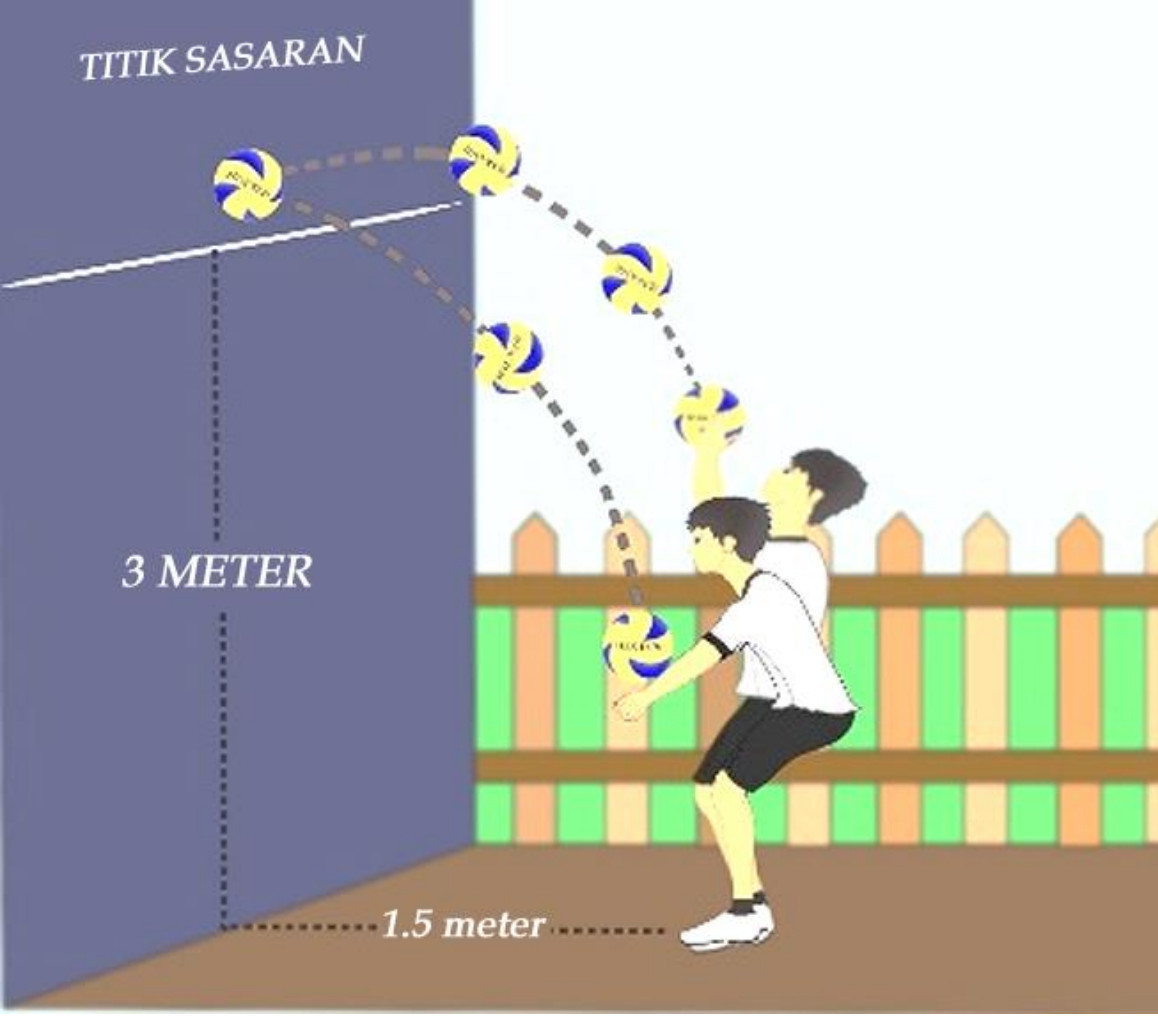
Evaluation - test of passes into the wall (upper and lower) in 60 seconds.
The results showed an increase in the level of mastery of technology. In general, the training was considered quite effective.
Key words: volleyball, transfer, online learning, website, efficiency.
1. Introduction
Basic volleyball techniques include:
- transmission
- feed
- forward kick
- block
Also distinguished:
- receiving serve
- pass (set)
- protection (dig)
Skills are divided into:
Attack
- feed
- transmission
- pass
- blow
Protection
- block
- reception
Passing is a key element of the game because:
- most often used
- launches an attack
- used in defense
Gear types:
- Lower (forearm pass)
- Upper (overhead pass / set)
2. Relevance of online learning
During the pandemic, training was conducted remotely.
Websites have become a platform for:
- video lessons
- educational materials
- tasks
- communications
Advantages of e-learning:
- accessibility
- flexibility
- cost reduction
- scalability
However, students noted the difficulties of the online format, which required research into its effectiveness.
3. Purpose of the study
To evaluate the effectiveness of teaching the technique of passing the ball through the website to 1st year students.
4. Methodology
Study design
Experimental Method - One Shot Case Study:
- X - training via website
- O - final testing
Sampling
- Population: 260 students
- Sample: 120
- Method: purposive sampling
Training
- 8 lessons
- Materials are posted on the website
Format:
- video
- instructions
- tasks
Assessment tool
Wall Gear Test (60 sec):
- lower gears
- top gears
Evaluation criteria
| Score | Evaluation | Category |
|---|---|---|
| > 40 | A | Excellent |
| 38–40 | B | Okay |
| 35–37 | C | Enough |
| < 35 | D | Bad |
Analysis formula
P = (ΣX₁ / ΣXn) × 100%
Where:
- P - percentage
- ΣX₁ — actual score
- ΣXn - perfect score
5. Results
Descriptive statistics
| Indicator | Meaning |
|---|---|
| N | 120 |
| Minimum | 20 |
| Maximum | 44 |
| Average | 35.33 |
| Std Dev | 4.99 |
Distribution of results
| Category | Qty | % |
|---|---|---|
| Excellent | 18 | 15% |
| Okay | 21 | 18% |
| Enough | 34 | 28% |
| Bad | 47 | 39% |
Interpretation
- A+B: 33%
- C+D: 67%
Average score (35.33) → category “Enough”.
Therefore, website-based training is moderately effective.
6. Discussion
Benefits of Web Learning
- access to materials 24/7
- parental involvement
- multimedia content
- interactivity
Formats:
- text
- graphics
- video
- tests
- simulations
Limiting factors
Internal
- motivation
- health
- intelligence
External
- Internet access
- equipment
- learning conditions
Specifics of motor skills
The online format is less suitable for:
- motor learning
- practice movements
- technique corrections
Full-time training provides:
- more practice
- live feedback
7. Limitations of the study
- One university
- One technique (transfer)
- Assessment of psychomotor skills only
Not analyzed:
- cognitive results
- affective aspects
8. Conclusions
- Web-based transmission training - quite effective
- High results among a minority
Improvements needed:
- content
- tasks
- evaluation systems
9. Practical recommendations
- Add interactive simulations
- Increase the amount of practice
- Implement video feedback
- Use a hybrid format